Coaching for leaders gets interesting one level below the goals, at the values: What are you prepared to defend when it costs you? Leaders who skip that question set priorities by urgency and spend three years very busy on the wrong things.
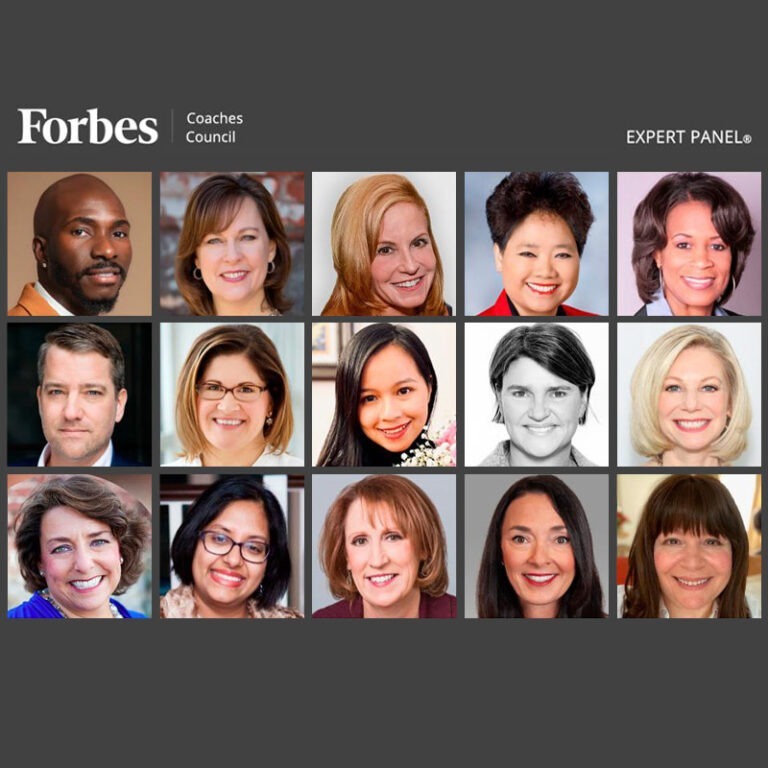
In February 2021, Forbes asked 13 members of the Forbes Coaches Council how they help clients discover their values and realign their priorities around them. I was one of them.
The 13 ways below keep the original order. The reading is mine, shaped by what I see with CEOs and executive boards in Zurich and Schaffhausen.
Simi Rayat uses motivational interviewing and storytelling to help clients name their top five values. Values show in what you tolerate and what you refuse. In my practice I prefer "what for" over "why": The why looks backward for causes, the what-for points at where your time belongs.
Source: Simi Rayat, Wellbeing Face Ltd
My contribution to the panel. I work with value cards or picture cards. The leader picks twelve, then removes them one by one until five remain. Then we check where behaviour and value diverge, say "reliability" on the card and an agenda rewritten three times a week. That clarity carries leaders through phases in which they would otherwise only react.
Source: Cristian Hofmann, Empowering Executives | SUPERGROUP LTD
Kate Peters walks through the areas of a client's life where there is friction. Friction comes from a value being ignored. I ask about the last meeting you left angry. Behind that anger usually sits a value you have never said out loud.
Source: Kate Peters, Bright Voyage Leadership
Vinesh Sukumaran treats values as emotions we want to experience. "More money" turns into "more luxury" and, after a third why, into "recognition" or "peace". A CFO who argues about his bonus usually wants his contribution seen. The priority then is visibility.
Source: Vinesh Sukumaran, Vinesh Sukumaran Consulting
Elizabeth Semion has clients look at a distant point, retirement or legacy, and asks whether today's actions lead there. I use the speech at your 65th birthday: What should your children and your board chair be able to say? The gap between that speech and your calendar is the work.
Source: Elizabeth Semion, Elizabeth Semion & Associates
Carol Brown uses assessments and a lot of listening to surface what matters to a client. Values decide how you appear in the room. A CEO who claims fairness loses authority the moment he waves a friend through a promotion. The team notices before he does.
Source: Carol Brown, 109
Angela Cusack suggests pausing in moments of disappointment or anger and writing down what was violated. Our values live in the space between what we think they should be and what actually moves us. Anger is a precise instrument for finding them.
Source: Angela Cusack, Igniting Success
Dhru Beeharilal takes clients back to the reason they started. Without that reason, motivation goes at the first headwind. Sometimes the examination shows the role was meant to please a father or a headhunter. Then at least you know where you stand.
Source: Dhru Beeharilal, Nayan Leadership, LLC
Izabela Lundberg recommends periodic reviews with the leadership team, especially after rapid growth or an acquisition. I see the pattern in Switzerland after every integration: The values of the acquired company still hang on the wall and apply nowhere. Taking the first sign seriously saves you the resignations in year two.
Source: Izabela Lundberg, Legacy Leaders Institute
Cyndee Blockinger Lake uses an exercise called "What's Your Story?" to surface the moments of truth that shaped your non-negotiables. Knowing where a value comes from lets you explain it. That matters in a board meeting when you defend an unpopular priority.
Source: Cyndee Blockinger Lake, Blank Page
India Gary-Martin asks clients to write down concrete things rather than abstract words. So "Sunday evening with the family, phones off" rather than "family". Then: What makes it important? That answer is your value set. Without that clarity leaders look interchangeable, and nobody trusts a copy.
Source: India Gary-Martin, Leadership For Life
Arthi Rabikrisson works through the wheel of life and asks for each facet: "What do you value most here?" The answers become a priority balance scale for the development plan. I run a ten-minute version of this with executive boards every quarter.
Source: Arthi Rabikrisson, Prerna Advisory
Rosie Guagliardo starts with the moments you felt most alive. Your values are visible there. Then review every activity in your calendar: Does it serve one of them? If it does not, why do it? Whatever stays gets a fixed slot, otherwise it remains an intention.
Source: Rosie Guagliardo, InnerBrilliance Coaching
Five years on, one thing has shifted in coaching for leaders: Most executives know their values. The hard part is giving things up. A board member who names "focus" as a value and runs 14 strategic initiatives in parallel has a decision problem, and a measurable one.
So at the start of a mandate we agree on three priorities at most, in writing, with dates. After 90 days we check which of them actually shaped the calendar. That gap says more about lived values than any card on the table.
Further reading on hofmann.coach: Executive Coaching Zurich · Leadership Coaching · 12 ways executives turn a weakness into a strength
Note: This page goes back to the Forbes Coaches Council expert panel "13 Ways To Discover And Realign Priorities Around Personal Values", published 23 February 2021. The commentary is mine.
Cristian Hofmann is an executive coach in Zurich and Schaffhausen (MAS Coaching & Supervision BSO, Forbes contributor). Over more than 20 years he has coached more than 1,500 leaders: CEOs, executive boards and leadership teams in Switzerland, with measurably agreed goals and, on request, pay-for-results. More about Cristian Hofmann.