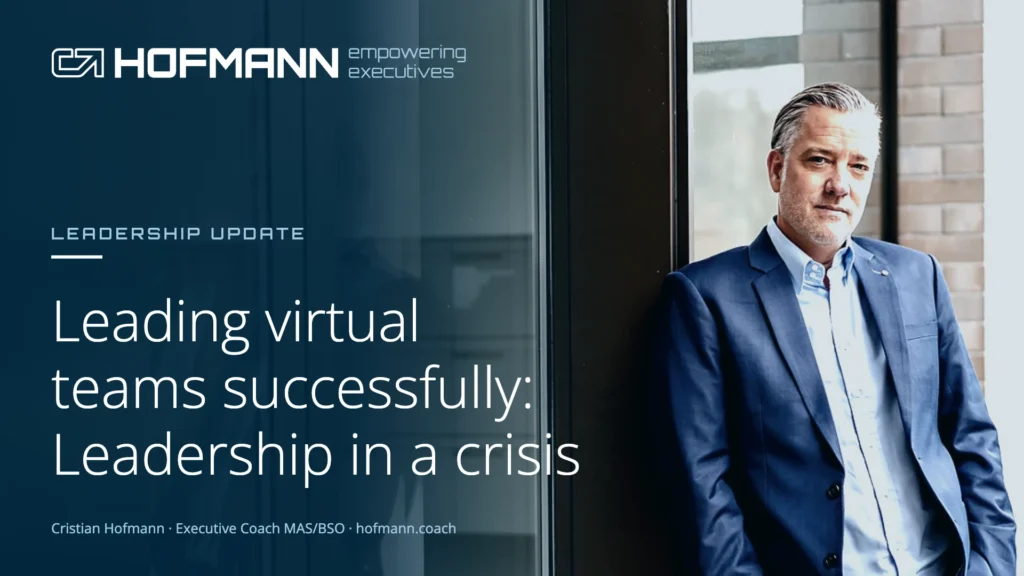
Is Switzerland ready for home office? Are companies and leaders equipped to work in virtual teams? I wrote this in April 2020, in the second week of the lockdown. I have left it largely as it was, because most of it still holds.
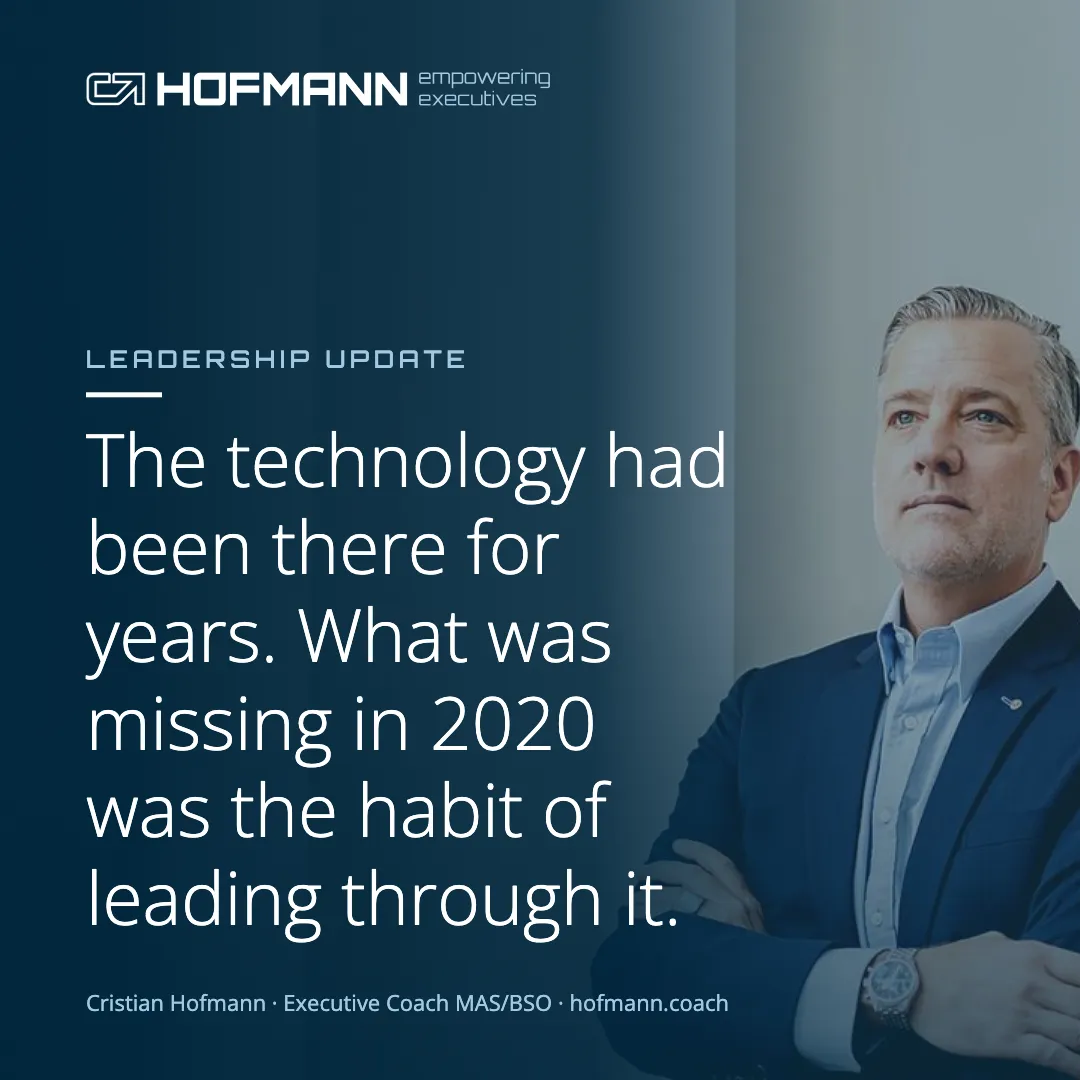
Swiss corporations and SMEs alike were caught off guard by the sudden obligation to do everything from home. Leadership teams were now led from a distance. The deciding factor was never the technology. The tools had been available for years. The question was whether we had the user competence, and beyond that, whether communication and leadership would keep up. Leadership had to become digital and agile within days.
How does leadership change in that constellation? What changes for leaders? And how can remote leadership, as the jargon elegantly calls it, contribute to your team's success? Here is what I saw in leadership coaching during those weeks.
Trust is given and has to be earned. Nothing new. Leaders and team leads trust their people and hand them responsibility. Virtual collaboration works no other way. The trust in the leader must not be forgotten at this point either. Did you know that successful teams trust their boss? In leadership coaching, trust is the first thing we measure.
Leading from a distance feels unfamiliar to you? Technical problems come up, or even misunderstandings in the team? Own it. Address fears and worries openly. This is about building trust as well, trust in you as the leader. Transparency helps because it supports communication and collaboration, and that in turn creates trust. Transparency always with the context in mind.
In the past week we saw how quickly networks get overloaded when the whole of Switzerland works from home. That calls for agile action, fast rethinking and flexibility on both sides, leadership and staff. Self-organisation and personal responsibility are major contributions in a time like this. The maturity of the team members shows here more than anywhere.
Ask your staff or your leadership team actively how things look at home. You cannot assume that every single employee can concentrate fully on the job right now. Many parents are teaching their children or caring for relatives. Listen and show understanding for their situation. Show interest in their well-being too. Empathy is the pillar that leadership coaching conversations return to most.
Weekly one-on-ones make sense in a virtual setting as well. Interaction happens more readily in a meeting of two than in a conference call with many participants. Concerns get voiced, and you can pick up on how people are doing.
Daily stand-up meetings, an instrument from Scrum, bring structure and continuity into the working day, including remote work. If there is a lot of exchange and alignment, you can keep doing it online. When critical decisions are due that need close collaboration despite social distancing, these daily team meetings give valuable orientation.
Across your entire hierarchy, everyone has to be able to use the communication technology. There should also be a shared understanding of which technology to use when. Rules on what gets communicated how and where should be clarified from the start.
Ask your people to organise and structure themselves. Your employees all have different strengths and are now working under exceptional circumstances that can differ widely from one another. Give them the tools, and trust their sense of responsibility.
An anecdote from my consulting practice. One of my clients had booked an in-person seminar on remote leadership, because of an existing matrix structure and several locations. The use of communication technology, and above all the challenges for the leaders, were on the agenda. Because of the measures ordered by the Federal Council, the seminar was cancelled. The group now works in exactly that setting: At a distance and in virtual teams.
The leaders are using the technical tools from their home offices and keep learning which challenges distance work and leading virtual teams bring, live in real leadership practice. There is probably no better teacher than life. The dry run and the prior engagement with the topics might still have given more confidence. In any case, I look forward to developing the workshops further in a few months: Case discussions and leadership development based on reflection and feedback, with concrete cases, focused on the individual application in daily work, and with it the development of each leader's communication and behaviour.
Reading this in 2026, two things strike me. The four pillars held. And the companies that struggled later with hybrid work were mostly the ones that had skipped pillar one in 2020. Trust that was never built at a distance rarely appears when people come back. That is the pattern I see most often in leadership coaching with remote and hybrid teams.
Further reading on hofmann.coach: Team empowerment: 16 ways to lead a virtual team · Leadership lives in the minds of those you lead · Executive Coaching Zurich
Cristian Hofmann is an executive coach in Zurich and Schaffhausen (MAS Coaching & Supervision BSO, Forbes contributor). Over more than 20 years he has coached more than 1,500 leaders: CEOs, executive boards and leadership teams in Switzerland, with measurably agreed goals and, on request, pay-for-results. More about Cristian Hofmann.