A top management team is seen as a united team when its members deliberately work on a shared attitude and on mutual trust. Each member brings their own standing, and the group as a whole can still look divided. Excellence becomes visible once the team speaks with one voice, inside the company and outside it.
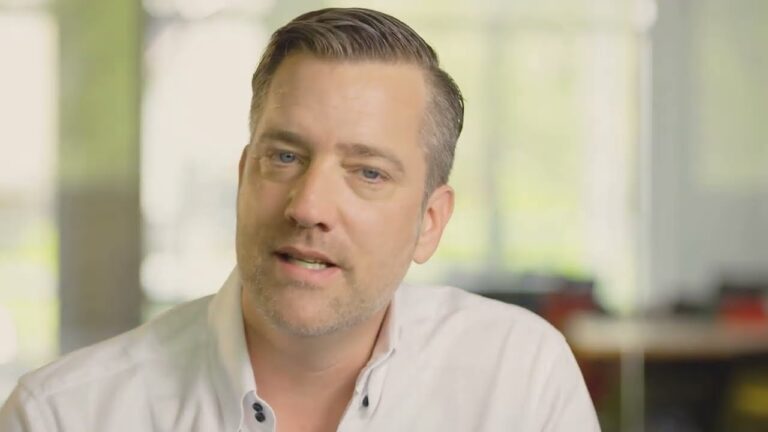
The video above is about the top management of a Swiss company that takes two days out for a workshop to reflect on how it works together. Genuine top leaders sit around the table, each with an individual standing. And yet the group isn’t perceived as a united team.
By top management team I mean the highest leadership level of a company, the executive board, when it carries joint responsibility for the whole. The difference from a circle of division heads shows up in one simple question: Does each member defend their own area, or does everyone represent the company?
Employees and the board of directors watch closely how senior leaders treat each other. A decision that one member backs in the meeting and then plays down in their own division gets around fast. The whole group loses standing as a result.
Attitude and trust decide whether collaboration succeeds in the long run. By attitude I mean the shared answer to what this team stands for and how it treats its own members, under pressure too.
That attitude rarely appears by itself. It gets negotiated, often in tough conversations about roles and about how the team handles mistakes.
In “The Five Dysfunctions of a Team” (2002), Patrick Lencioni describes the absence of trust as the most basic weakness a team can have. Where trust is missing, people avoid conflict, and without open conflict, real commitment rarely follows.
At the top, trust means something concrete: I can show a weakness or disagree in this circle, and it won’t come back to hurt me later.
Three things make collaboration at the top work. They sound simple, which is probably why so many top teams skip them.
Shared goals: The team agrees on the company’s goals and on what each member contributes to them. Divisional targets that contradict each other belong on the table before they collide in daily business.
Known interests: Every member knows the interests of the others well, including the unspoken ones. If you know what keeps the CFO awake at night, you read their objections differently.
Open communication: The team keeps up a culture of communication that is as open as possible. Criticism is voiced in the meeting, and after the meeting everyone represents the decision.
How individual leaders become a working leadership team step by step, with a clear framework and clean interfaces, is the subject of Team collaboration: How individuals become a leadership team. Here the focus is on how the top management team is perceived as a unit.
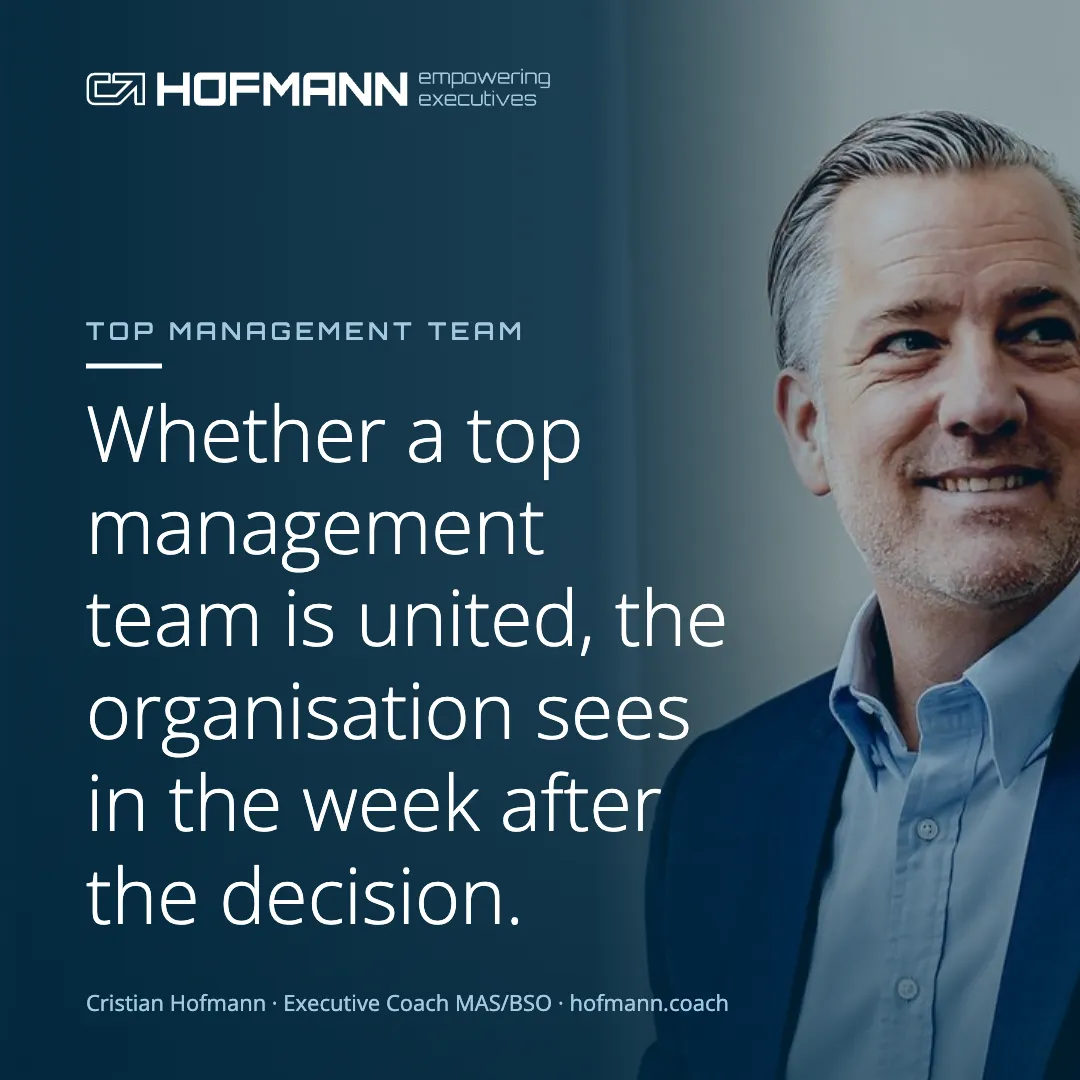
You see the quality of a top management team in small things. Members talk about “our decision” in front of their people. Conflicts between divisions reach the executive board early, while they’re still small.
Raising leadership effectiveness at the top creates a strong, shared standing, and the organisation feels it quickly. Decisions hold, and discussions get shorter, because detours via individual division heads stop paying off.
Another test is how bad news travels. A united top management team hears about problems early, because members keep nothing from each other, and it responds as one.
A top management team rarely works on itself. The calendar is full of business topics, and collaboration runs along on the side. Two days of workshop, as in the video, can look like a luxury, and in my experience they usually pay for themselves.
There’s a limit, though. Unity on the outside must never replace real argument on the inside. A group that only ever looks harmonious will sooner or later make worse decisions.
And sometimes the problem lies in who sits at the table. Teamwork can’t fix that, and naming it openly is part of the CEO’s responsibility.
It’s the highest leadership level of a company, usually the executive board or executive committee, jointly responsible for the whole business. Its members run individual divisions and at the same time decide on strategy and priorities as a group.
Decisions hold after the meeting, and every member represents them the same way in their own division. Disagreement gets voiced in the room. Afterwards, the team speaks with one voice.
What works for me is one longer off-site a year and short reviews in regular meetings in between. Ten minutes at the end of a meeting are often enough: What worked well today, and what will we do differently next time?
Model the attitude you expect from the team and address deviations early. That includes asking for disagreement in the meeting and refusing to let solo runs pass quietly afterwards.
Further reading on hofmann.coach: Top management coaching: Why successful leaders work with a coach · About Cristian Hofmann, executive coach · Co-leadership: How two leaders at the top make it work · Leader as coach: How trust and standing grow in your team
Note: This article was first published on 12.11.2019 and was revised and expanded in October 2026.
Cristian Hofmann is an executive coach in Zurich and Schaffhausen (MAS Coaching & Supervision BSO, Forbes contributor). Over more than 20 years he has coached more than 1,500 leaders: CEOs, executive boards and leadership teams in Switzerland, with measurably agreed goals and, on request, pay-for-results. More about Cristian Hofmann.