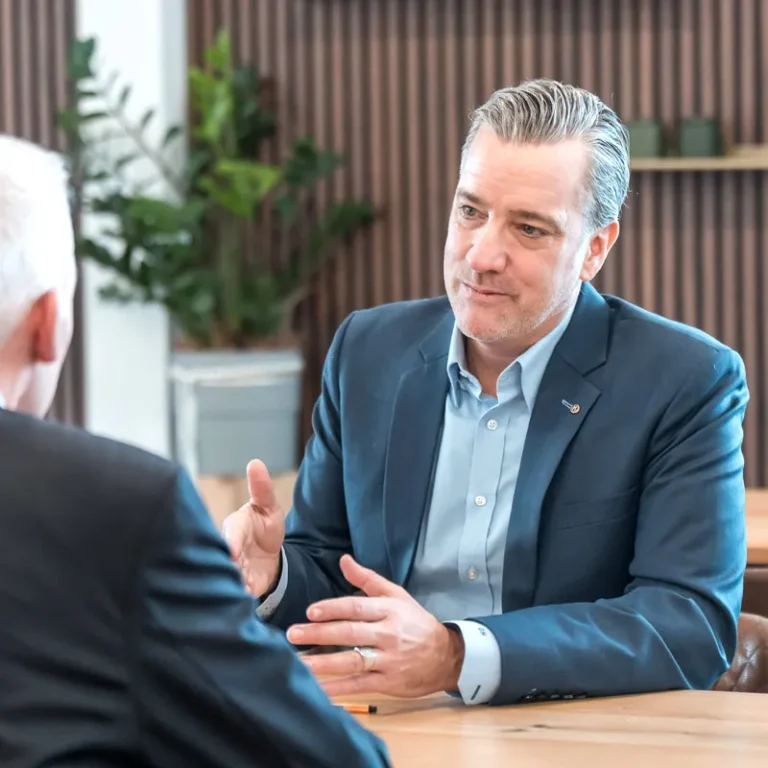
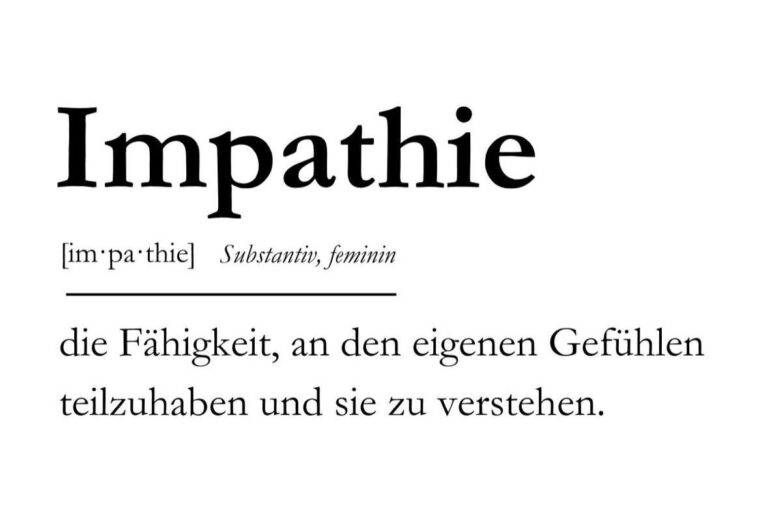
Unresolved conflicts smoulder and hurt team performance. They work like sand in the gears, and lost revenue can be the direct result. It doesn't have to be that way. In a forward-looking solution culture, conflicts get processed and resolved deliberately. I wrote this in March 2020; the closing section is from today.
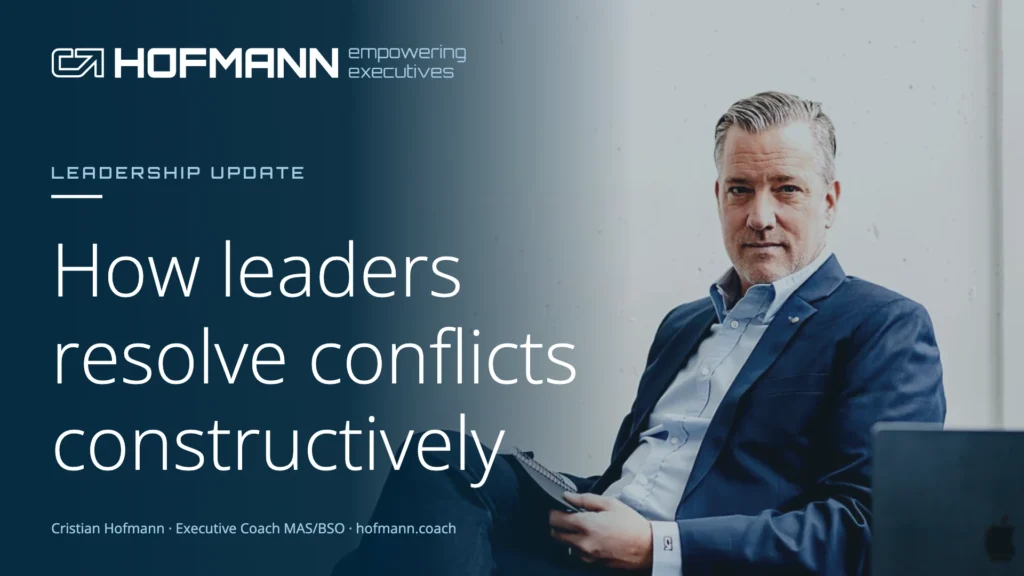
When people with different personalities, values and perspectives work together, they can end up in conflict. It is worth understanding that a different view of a problem, or a different opinion, is no conflict in itself. As long as the discussion and the behaviour stay focused on the matter, differences on a topic can produce very fruitful and lasting solutions.
Dealing constructively with conflict is essential for effective collaboration. Resolving conflicts in a team means more than fixing problems ad hoc. It means integrating a positive approach to differences into the company culture. Conflicts should be used to work out better solutions, to create trust and to build a healthy culture of argument. An honest and lasting solution culture, in which conflicts make collaboration in teams more effective.
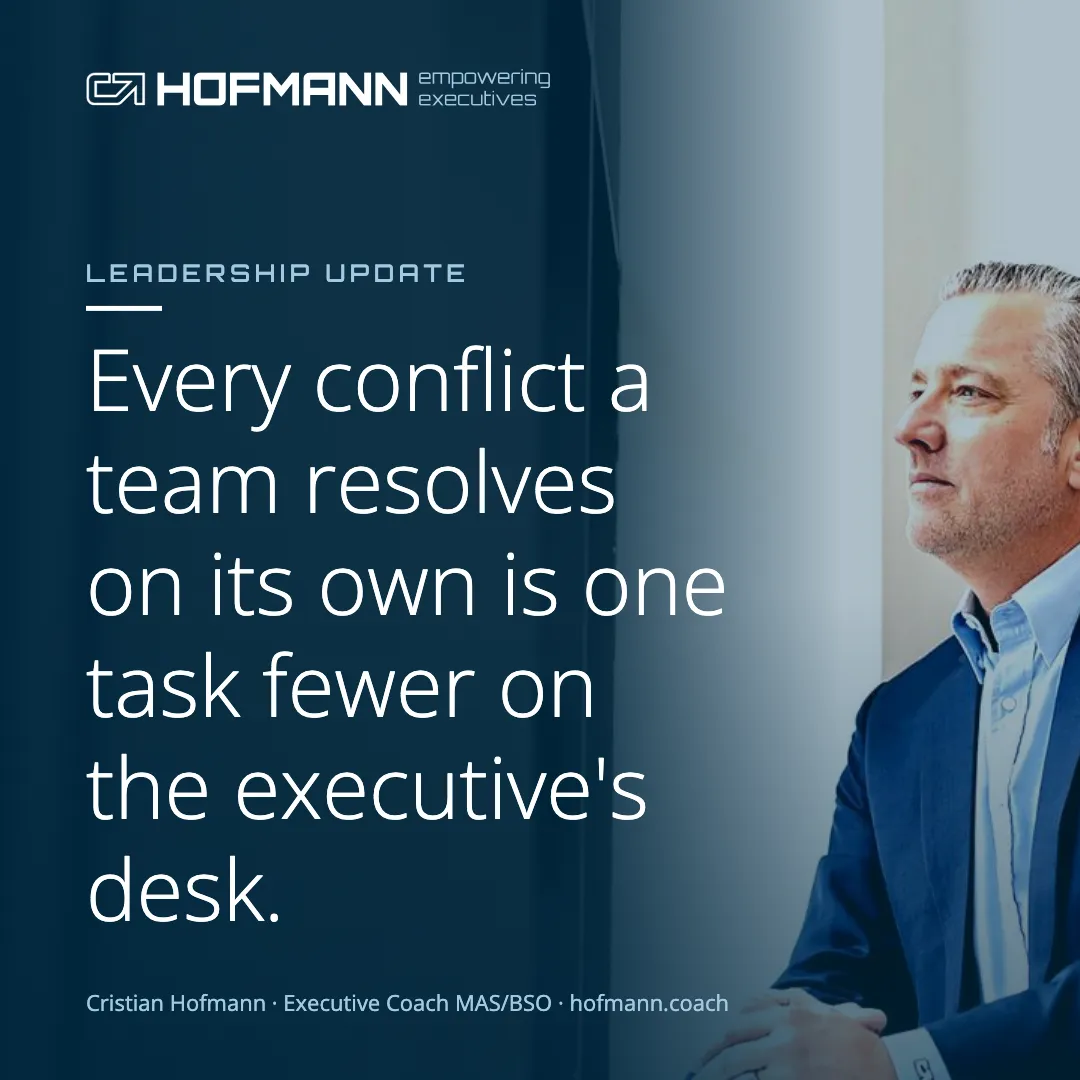
When employees are in conflict, leaders often expect them to settle it directly between themselves. Up to a medium level of escalation, that expectation is legitimate. The prerequisite is that the conflict is recognised and its escalation level is judged correctly. Resolving the disagreement directly in the team brings several advantages. Every task a team can solve on its own, whether a leadership team or an operational one, is one task fewer for the executive. Self-organisation ranks above your own perfectionism here. It takes trust in the team's solution. Taking responsibility for resolving conflicts also equips the team for difficult tasks in the future. That is empowerment in practice, and it is what most of my manager coaching work comes down to.
Resolving conflicts in the team right away is possible only if the right instruments are accessible and tangible. Leadership teams and employees therefore need to be enabled to apply lasting conflict management at work. Disagreements then get used for development from the start and don't escalate into a blocking drama.
These questions come up when analysing a conflict: Which escalation level has the conflict reached? What is its cause? How does one party react to the other? Which approaches to a solution exist? Most leaders master this method. The conflict is looked at analytically. For developing high-performance teams it is of limited use, because the competence to resolve stays with the leader and is never handed to the team. No empowerment takes place.
Other methods transfer the search for a solution to the team. Ideas, even controversial ones, may be put forward as long as they stay on the matter. The team then asks itself questions that start reflection: Is my behaviour the best possible contribution? Is this the best way for us? Are we meeting the needs of everyone involved in a balanced way?
If the group arrives at a solution everyone agrees with, that is consensus. If a decision is taken because the arguments against it have been invalidated, that is consent. If the conflict cannot be resolved at all, the leader takes a decision the team can work with. Use conflicts and tensions to build the team and to let a healthy, constructive conflict culture emerge.
The leaders who ask me for manager coaching on conflict usually struggle with timing. The conflict was visible for weeks before anyone named it. The first strategy is therefore the cheapest one: Say what you see, early, and in the room.
Further reading on hofmann.coach: Shared leadership: 15 tactful ways to challenge your boss · Positive Leadership: Five tests to run before you invest · Leadership Coaching
Cristian Hofmann is an executive coach in Zurich and Schaffhausen (MAS Coaching & Supervision BSO, Forbes contributor). Over more than 20 years he has coached more than 1,500 leaders: CEOs, executive boards and leadership teams in Switzerland, with measurably agreed goals and, on request, pay-for-results. More about Cristian Hofmann.