Remote and hybrid work stayed after the pandemic, and so did the question every leader asked in 2020: How do I lead people I rarely see in one room?
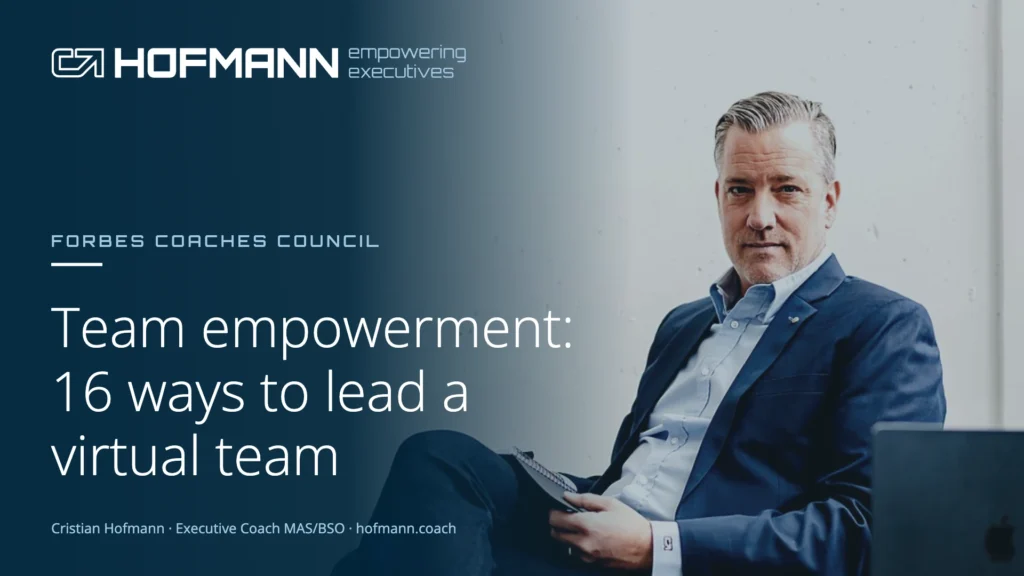
In 2021, Forbes asked 16 members of its Coaches Council for their best advice on leading virtual teams. I was one of them. Here are the 16 ways as I read them today, five years on, with one thread running through most of them: Team empowerment works at a distance, control doesn't.
The last years showed that virtual teams need the same thing as physical ones: Get to know the humans in the team, learn what gives them energy, notice when they struggle, and find out how you can help them reach their goals. The screen changes the medium, nothing else.
Origin: Carol Brown, 109
Agree on frequency and cadence, so people stay connected. Don't assume there's no culture just because the team is hybrid or fully remote. Define the culture and protect it: Which values, and how are they lived on screen? Above all, hold one-on-ones with your direct reports.
Origin: Shelley Smith, Premier Rapport
People working from home risk losing the sense of belonging to the team and to the company's success. Check in. Be present, because your team needs a leader they respect and who keeps them safe and valued. Inspire, and say thank you more often than feels necessary.
Origin: Robert Gauvreau, Gauvreau
Connection in a remote team isn't a given. Like trust, it's built through actions and behaviours, between you and the team and between the members themselves. Strong connection brings smoother communication, stronger collaboration and higher productivity.
Origin: Karim Amri, Humana Canada Consultancy
Lead remote and hybrid teams with empathy, clear expectations and clear goals. Team-building events matter even more at a distance. One panellist shares DISC profiles with her team to learn how each person communicates and which projects suit them.
Origin: Holly Lee, Holly Lee & Associates
Start by understanding what remote work does to your team, instead of assuming you already know. Give people a safe way to voice the challenges of working remotely. Offer different ways to connect: One-on-one check-ins, virtual coffee in small groups.
Origin: Breshana Miller, Kairos Coaching & Consulting
Encourage a high degree of autonomy: Let people decide, innovate and get things done. Your own authentic behaviour and daily interactions build social cohesion and trust through shared purpose. Team empowerment at a distance means exactly that: Fewer check-ups, clearer purpose.
Origin: Zoran M. Pavlovic, Heruka Health Innovations
Start from the assumption that your team members are professional adults who don't need surveillance. Let results speak louder than words. For that you need a clean agreement on objectives, key results and action plans. In the one-on-ones, talk about dreams and challenges, beyond transactions.
Origin: Ozlem Sarioglu, SparkUs Digital Coaching
Learn the names of partners and kids, what's going on in people's lives, what they do outside work. Set regular one-on-ones and don't cancel them. It's their time with you. And replace "How are you doing?" with "What's on your mind?"
Origin: Christopher Mullen, UKG
You can't open a laptop and expect to connect. Buy an external webcam and set the lens at eye height. Put the camera in front of the monitor and the speaker slightly above it, so when you talk to the speaker you look into people's eyes. Small investment, large effect.
Origin: Cara Heilmann, Ready Reset Go
This one is mine, and it hasn't changed. A positive leader rejoices with employees when they reach goals and says so. Positive feedback for what's achieved, constructive feedback for what's missed. Set challenging goals that are achievable, and give praise and recognition in time, meaning within days.
Origin: Cristian Hofmann, Empowering Executives, SUPERGROUP AG
Sounds trivial, isn't. Ask everyone to commit to no other work during team video meetings: No texting, no email. Then ask what would have to happen in the meeting to make them glad to do so. Make the meeting worth the attention you demand.
Origin: Joel M. Rothaizer, Clear Impact Consulting Group
Leading virtual teams is the same as leading face to face, with one addition: You have to orchestrate the direct interactions that hallway conversations used to provide. One-on-ones, skip-level meetings, group meetings, on a schedule.
Origin: Mary Patry, ITeffectivity
On a scale from 1 to 10, with 10 being overwhelmed and 1 being on vacation, where are you right now? One panellist saw average scores between 8 and 12 in his teams, and the brief explanations made people kinder, more patient and better at coordinating.
Origin: Mark Samuel, IMPAQ Corporation
Global virtual teams need leaders who read the small differences: How an ice-breaker works in one region and fails in another, what builds rapport and belonging where. That fluency raises the emotional intelligence of the whole team and shows you how people prefer to be engaged.
Origin: Rakish Rana, The Clear Coach
Set up an open-door policy with regular informal virtual fireside chats, no agenda. The goal: Everyone, remote or on site, has the same access to leaders and to the informal conversations that used to happen at the water cooler.
Origin: Jay Rai
Twelve of the 16 ways come down to one word: Trust. Agree on results, drop the surveillance, keep the one-on-ones, celebrate what's reached. That's team empowerment, and it's the same recipe in the office. Distance only makes the absence of trust visible faster.
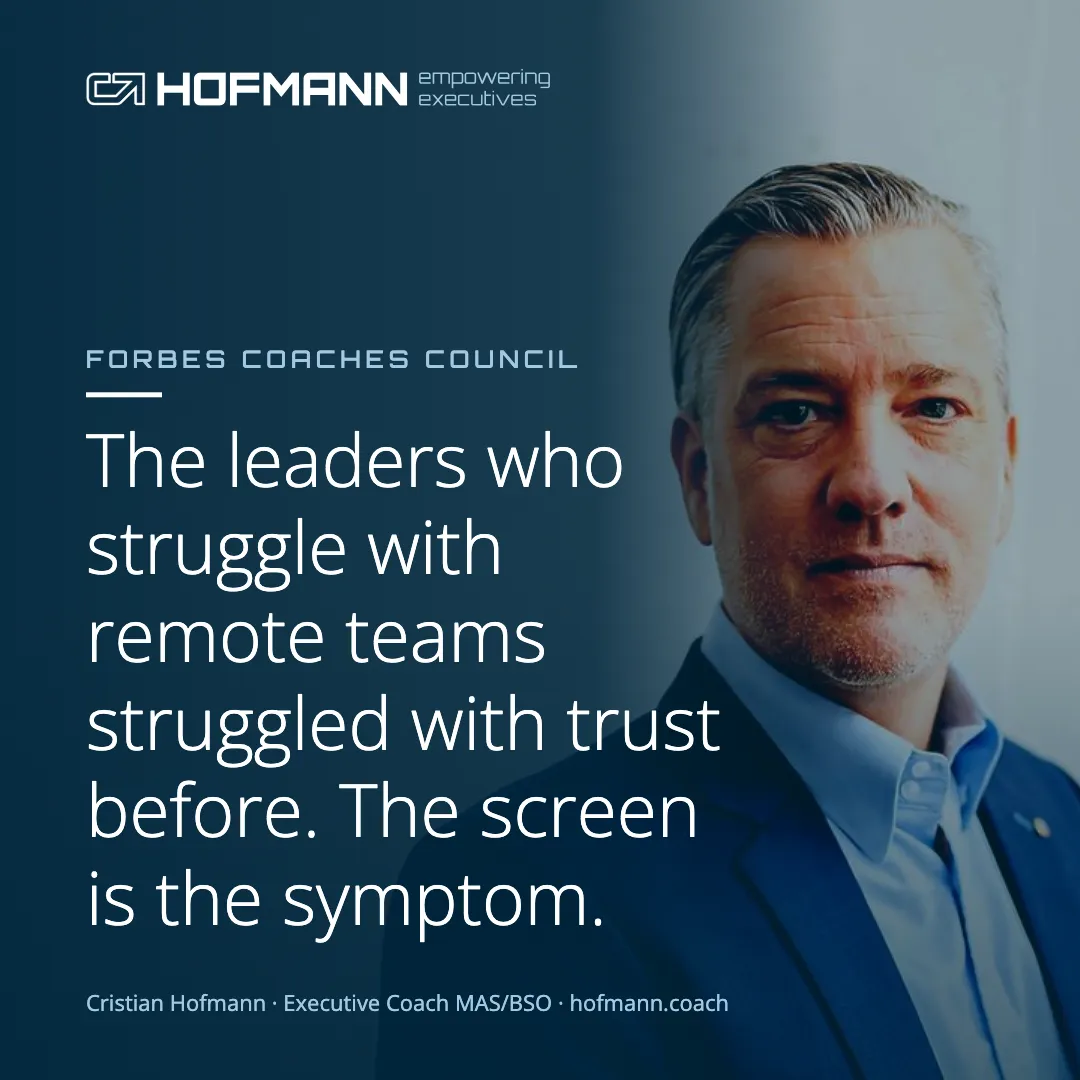
Whether every team can carry that much autonomy, I doubt it. New teams and new leaders need more structure first. What I see in coaching: The leaders who struggle with remote teams struggled with trust before. The screen is the symptom.
Further reading on hofmann.coach: 15 ways companies can better manage a remote workforce · 14 critical components of successful team-building · Leadership Coaching
Note: The 16 ways come from the Forbes Coaches Council expert panel "16 Ways To Lead A Virtual Team In Remote And Hybrid Work Environments", published 15 December 2021. Contribution no. 11 is my own. My reading of the other fifteen is mine, and it isn't a quote of my colleagues' wording.
Cristian Hofmann is an executive coach in Zurich and Schaffhausen (MAS Coaching & Supervision BSO, Forbes contributor). Over more than 20 years he has coached more than 1,500 leaders: CEOs, executive boards and leadership teams in Switzerland, with measurably agreed goals and, on request, pay-for-results. More about Cristian Hofmann.